
Coastal priorities and potential measures
The Strategy aims for the restoration of natural processes and progression on our coast and in our estuaries, enabling these habitats to adapt and be resilient to climate change. It aims to minimise the loss of intertidal habitats through strategic and holistic management, which also supports a range of high-functioning, connected coastal habitats.
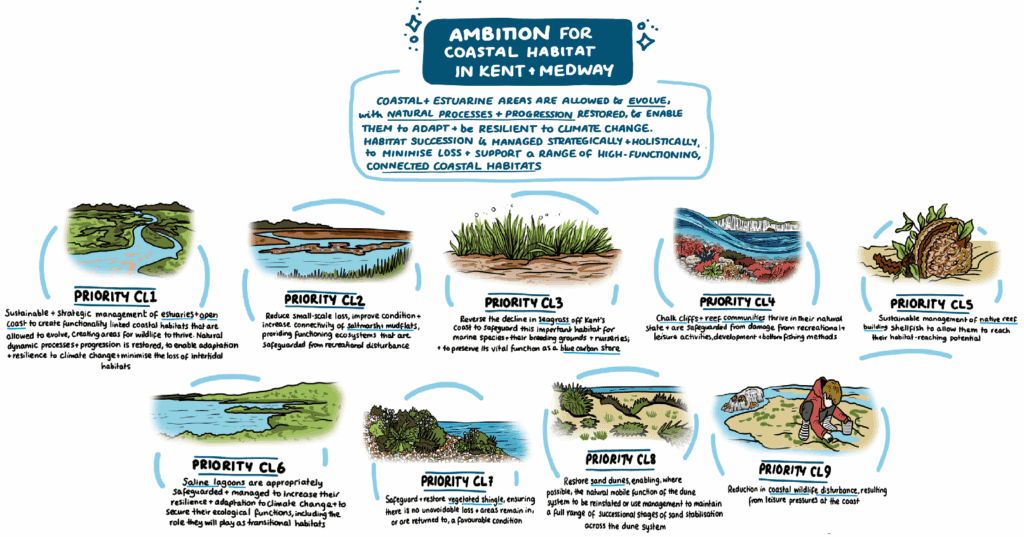
Click on the priorities below to view the associated potential measures. You can download all the coastal priorities and measures in the document at the end of the page. Where a number appears missing, this is because it is associated with a wider measures. Wider measures are not a formal element of the Strategy and are therefore not included in the list below – however they are included in the downloadable measures documents.
Note: the priority and potential measures for grazing marsh can be found under grassland habitats (GL2)
- Priority CL1 – Sustainable and strategic management of estuaries and open coast to create functionally linked coastal habitats that are allowed to evolve, creating areas for wildlife to thrive. Natural dynamic processes and progression is restored, to enable adaptation and resilience to climate change and minimise the loss of intertidal habitats.
Potential measure CL1.3 Remove hard defences where appropriate (ensuring that both the natural and built environment is not at risk of inundation, damage or loss as a result), to allow space for tidal ingress and to enable the managed realignment of the coastline, to mitigate coastal squeeze and to allow intertidal habitats to be more resilient to climate change.
Potential measure CL1.4 Create areas for saltmarsh restoration, seagrass regeneration and high-tide roosts, and provide breeding areas for seabirds and/or waders, with appropriate measures to prevent or reduce disturbance and predation.
- Priority CL2 – Reduce small-scale loss, improve condition and increase connectivity of saltmarsh and mudflats, providing functioning ecosystems that are safeguarded from recreational disturbance.
Potential measure CL2.2 Restore small-scale saltmarsh using traditional materials to slow down loss.
Potential measure CL2.3 Create new high-tide roosts in areas less vulnerable to rising sea levels.
Potential measure CL2.4 Link areas with other wetland habitats to form a landscape mosaic of wetlands to reduce the tendency for waders and seabirds to be concentrated at key hotspots and reserves.
- Priority CL3 – Reverse the decline in seagrass off Kent's coast to safeguard this important habitat for marine species and their breeding grounds and nurseries, and to preserve its vital function as a blue carbon store.
Potential measure CL3.1 Address threats to seagrass beds by putting in place management which:
– reduces and addresses pollution sources that impact seagrass restoration and growth
– removes invasive spartina where it is known to be invading, smothering or limiting seagrass extension and restoration.
– minimises damage from boat anchors, dredging, fishing and trampling.Potential measure CL3.2 Increase areas of existing seagrass beds.
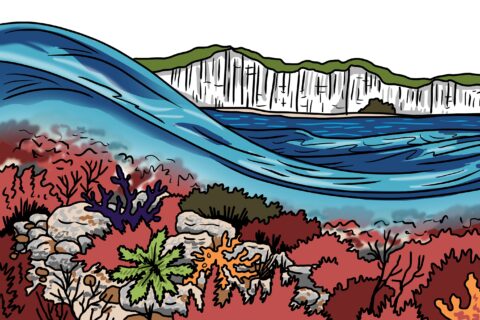
- Priority CL4 – Chalk cliffs and reef communities thrive in their natural state and are safeguarded from damage from recreational and leisure activities, development and bottom fishing methods.
There are no potential measures for this priority, which is supported by wider measures. Wider measures are applicable in the case of this priority, given the large extent of chalk habitats off the coastline and the need for all stretches of this to be safeguarded.
- Priority CL5 – Sustainable management of native reef building shellfish to allow them to reach their habitat-providing potential.
Potential measure CL5.1 Safeguard established areas of Native Oysters and Blue Mussels by developing protected areas with management measures, in collaboration with local stakeholders, including the local fishing community.
Potential measure CL5.2 Where practical, remove invasive non-native species from the beds of Native Oysters and Blue Mussels.
Potential measure CL5.3 Create suitable substrate for native oysters to colonise, focusing on existing/historic areas, and address the lack of larvae in the landscape.
Potential measure CL5.4 Create suitable substrate for Blue Mussels to colonise, focusing on existing/historic areas.
- Priority CL6 – Saline lagoons are appropriately safeguarded and managed to increase their resilience and adaptation to climate change and to secure their ecological functions, including the role they will play as transitional habitats.
Potential measure CL6.1 Safeguard existing saline lagoons from loss and damaging activities that harm and/or pollute the lagoons.
Potential measure CL6.2 Establish buffer zones and/or adjust site features and topography to ensure the ecological function of saline lagoon is not undermined by disturbance, and enhance marginal habitat.
Potential measure CL6.3 Create new saline lagoons to connect wetland sites in transitional areas that are likely to flood, taking into account their proximity to sources of recreational disturbance.
- Priority CL7 – Safeguard and restore vegetated shingle, ensuring there is no unavoidable loss and areas remain in, or are returned to, a favourable condition.
Potential measure CL7.1 Safeguard existing habitat through access management and interventions (e.g. allocated routes and boardwalks) that minimise the impact of footfall and recreational disturbance on this delicate habitat.
Potential measure CL7.2 Safeguard and extend supporting habitats, such as species-rich grasslands, next to coastal shingle that can act as seepage areas and support a mosaic of habitats for important coastal shingle species.
- Priority CL8 – Restore sand dunes, enabling, where possible, the natural mobile function of the dune system to be reinstated or use management to maintain a full range of successional stages of sand stabilisation across the dune system.
Potential measure CL8.1 Manage dunes to reduce scrub encroachment, remove invasive species and reduce disturbance pressures of recreational activities. Management to include year-round low-intensity grazing in the absence of endectocides, and with high-quality fodder in winter to maintain high dung quality.
Potential measure CL8.2 Enable more naturalised and mobile sand dune systems through a full range of successional stages of sand stabilisation across the dune system, from mobile sparsely vegetated foredunes, young dunes with dense Marram Grass clumps, to more established dunes with varied vegetation, stable sandy grassland or heath, open sandy areas and dune slacks. Address overstabilisation of the dunes to increase dune mobility and sand movement.
- Priority CL9 – Reduction in coastal wildlife disturbance resulting from leisure pressures at the coast.
There are no potential measures for this priority, which is supported by wider measures. Wider measures are applicable in the case of this priority, given the county’s large extent of coastline and the need for all stretches of this to benefit from reduced wildlife disturbance.
Coastal priorities - potential measures and wider measures
Coastal priorities – potential measures and wider measures
Download PDF (81 KB) - Coastal Priorities And Potential Measures
Searchable potential measures and wider measures listings - all priorities
Searchable potential measures listing

Searchable wider measures listing